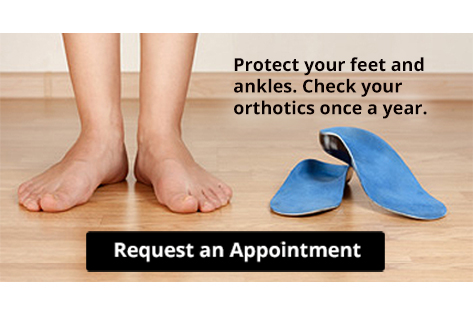
Custom orthotics, or shoe inserts, should be periodically replaced. Orthotics must fit properly to give you the best results. Protect your feet and ankles!
Custom orthotics, or shoe inserts, should be periodically replaced. Orthotics must fit properly to give you the best results. Protect your feet and ankles!
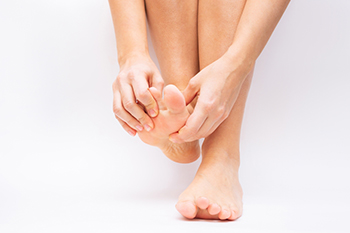
The toes of the feet are intricate and complicated because they serve essential roles in providing balance and facilitating motion. Some individuals have a second toe that is longer than their big toe. However, if your big toe is longer than your second toe, this can tell you important things about your athletic ability. For example, since the big toe can exert twice as much force as the second toe, having a longer big toe can provide an individual an edge in activities such as skiing and sprinting. Sprinters can benefit because having a firmly grounded big toe enables one to essentially accelerate in a rapid fashion. If you are someone that wants to learn more about the biomechanics of the feet and are curious about how toe length affects athletic ability, it is suggested that you contact a podiatrist for an appointment.
If you have any concerns about your feet, contact Terri Quebedeaux, DPM from Agave Podiatry . Our doctor can provide the care you need to keep you pain-free and on your feet.
Biomechanics in Podiatry
Podiatric biomechanics is a particular sector of specialty podiatry with licensed practitioners who are trained to diagnose and treat conditions affecting the foot, ankle and lower leg. Biomechanics deals with the forces that act against the body, causing an interference with the biological structures. It focuses on the movement of the ankle, the foot and the forces that interact with them.
A History of Biomechanics
Modern technological improvements are based on past theories and therapeutic processes that provide a better understanding of podiatric concepts for biomechanics. Computers can provide accurate information about the forces and patterns of the feet and lower legs.
Understanding biomechanics of the feet can help improve and eliminate pain, stopping further stress to the foot.
If you have any questions please feel free to contact our offices located in Seguin, LaVernia, Gonzales, and Lockhart, TX . We offer the newest diagnostic and treatment technologies for all your foot and ankle needs.
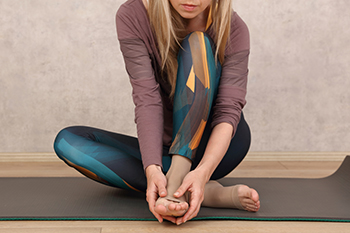
Individuals who have poor circulation in the feet are essentially experiencing reduced blood flow to the feet. Symptoms of poor circulation in the feet are varied but can include sensations of tingling and numbness. If you are an individual that drives an automobile for long periods of time, then you might be at an increased risk of experiencing poor circulation in the feet. For example, long-haul drivers spend a significant amount of the work day in a sedentary state. As a result, long-haul truck drivers may experience increased incidences of poor circulation. If you are someone that drives for extended periods of time every day, then it is suggested that you consult with a podiatrist. This foot specialist can help you address any issues you might be having.
Poor circulation is a serious condition and needs immediate medical attention. If you have any concerns with poor circulation in your feet contact Terri Quebedeaux, DPM of Agave Podiatry . Our doctor will treat your foot and ankle needs.
Poor Circulation in the Feet
Poor blood circulation in the feet and legs is can be caused by peripheral artery disease (PAD), which is the result of a buildup of plaque in the arteries.
Plaque buildup or atherosclerosis results from excess calcium and cholesterol in the bloodstream. This can restrict the amount of blood which can flow through the arteries. Poor blood circulation in the feet and legs are sometimes caused by inflammation in the blood vessels, known as vasculitis.
Causes
Lack of oxygen and oxygen from poor blood circulation restricts muscle growth and development. It can also cause:
Those who have diabetes or smoke are at greatest risk for poor circulation, as are those who are over 50. If you have poor circulation in the feet and legs it may be caused by PAD and is important to make changes to your lifestyle in order to reduce risk of getting a heart attack or stroke. Exercise and maintaining a healthy lifestyle will dramatically improve conditions.
As always, see a podiatrist as he or she will assist in finding a regimen that suits you. A podiatrist can also prescribe you any needed medication.
If you have any questions please feel free to contact our offices located in Seguin, LaVernia, Gonzales, and Lockhart, TX . We offer the newest diagnostic and treatment technologies for all your foot and ankle needs.
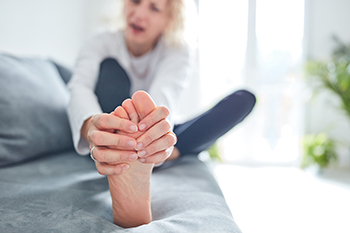
Foot pain is often ignored until it impacts everyday routines. Having chronic foot pain may cause unstable foot function, which can increase the chances of falling. Common reasons for foot pain can include obesity and wearing shoes that do not fit correctly for extended periods. A stress fracture can be a likely cause of foot pain and can cause difficulty in walking. Heel pain can come from plantar fasciitis, a heel spur, or an Achilles tendon injury. General foot pain may be indicative of psoriatic arthritis and can affect the toenails, heels, and soles of the feet. Additionally, gout is a form of arthritis that often targets the joints in the big toe. Gout occurs due to excess uric acid levels in the blood which may come from specific types of foods that are eaten. If you have foot pain for any reason, it is strongly suggested that you consult with a podiatrist who can properly diagnose and treat various types of foot pain.
Foot Pain
Foot pain can be extremely painful and debilitating. If you have a foot pain, consult with Terri Quebedeaux, DPM from Agave Podiatry . Our doctor will assess your condition and provide you with quality foot and ankle treatment.
Causes
Foot pain is a very broad condition that could be caused by one or more ailments. The most common include:
Diagnosis
To figure out the cause of foot pain, podiatrists utilize several different methods. This can range from simple visual inspections and sensation tests to X-rays and MRI scans. Prior medical history, family medical history, and any recent physical traumatic events will all be taken into consideration for a proper diagnosis.
Treatment
Treatment depends upon the cause of the foot pain. Whether it is resting, staying off the foot, or having surgery; podiatrists have a number of treatment options available for foot pain.
If you have any questions, please feel free to contact our offices located in Seguin, LaVernia, Gonzales, and Lockhart, TX . We offer the newest diagnostic and treatment technologies for all your foot care needs.
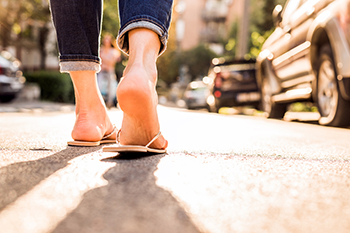
Flip-flops may be cute, easy, and inexpensive additions to a summer wardrobe, but they can cause problems for your feet and body. This type of footwear usually does not cushion the feet from impact when walking, particularly on harder surfaces like asphalt, and can cause foot and leg pain. Because they leave the feet exposed, one is susceptible to bites, infections, and injuries when wearing them. Also, since these shoes have a flat form, wearing them can lead to gait problems. They do not give stability to the feet or stay on the feet well and can result in muscle pain throughout the body. If you have additional questions about the effects of wearing flip-flops, it is suggested that you consult with a podiatrist for an expert opinion.
Flip-flops can cause a lot of problems for your feet. If you have any concerns about your feet or ankles, contact Terri Quebedeaux, DPM from Agave Podiatry . Our doctor will assist you with all of your foot and ankle needs.
Flip-Flops and Feet
Flip-flops have managed to become a summer essential for a lot of people. While the shoes may be stylish and easy to slip on and off, they can be dangerous to those who wear them too often. These shoes might protect you from fungal infections such as athlete’s foot, but they can also give you foot pain and sprained ankles if you trip while wearing them.
When Are They Okay to Wear?
Flip-flops should only be worn for very short periods of time. They can help protect your feet in places that are crawling with fungi, such as gym locker rooms. Athlete’s foot and plantar warts are two common fungi that flip-flops may help protect your feet against.
Why Are They Bad for My Feet?
These shoes do not offer any arch support, so they are not ideal for everyday use. They also do not provide shock absorption or heel cushioning which can be problematic for your feet. Additionally, you may suffer from glass cuts, puncture wounds, and stubbed toes since they offer little protection for your feet.
More Reasons Why They Are Bad for Your Feet
If you have any questions, please feel free to contact our offices located in Seguin, LaVernia, Gonzales, and Lockhart, TX . We offer the newest diagnostic and treatment technologies for all your foot care needs.
Connect With Us
